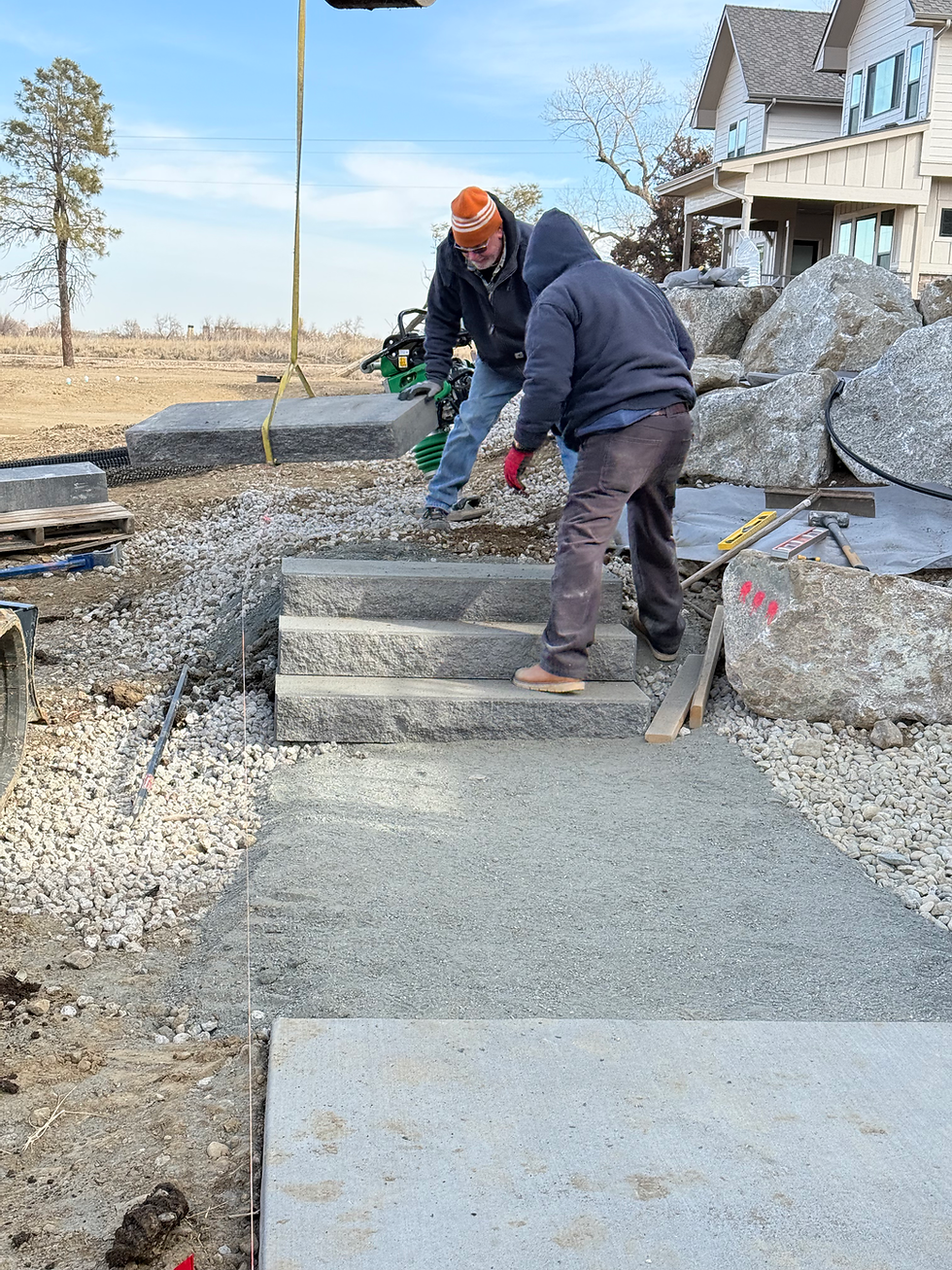
Patio vs. Deck in Boulder: Which Outdoor Living Space Actually Performs Better?

Choosing between a patio and a deck is one of the first decisions Boulder homeowners face when planning an outdoor living space, and it's rarely as simple as picking a style. Boulder's combination of expansive clay soils, intense high-altitude sun, freeze-thaw winters, and sloped lots means the "right" choice depends as much on engineering as it does on aesthetics. Getting this decision wrong can mean a beautiful surface that heaves, cracks, or rots within a few seasons. Getting it right means decades of low-maintenance enjoyment and a real bump in property value.
What Is the Difference Between a Patio and a Deck?
A patio is a ground-level hardscape surface built directly on or near grade, typically using stone, pavers, or concrete, while a deck is an elevated structure built on a supporting frame, usually wood or composite decking over footings. This distinction matters more in Boulder than in flatter, more temperate climates. A patio interacts directly with the soil beneath it, which means soil movement, drainage, and grading become primary engineering concerns. A deck, by contrast, is engineered to float above grade, which can solve certain drainage and slope problems but introduces its own structural considerations around footings, frost depth, and load-bearing capacity.
From a design standpoint, patios tend to create a grounded, indoor-outdoor flow that works well with single-story ranch homes and properties with relatively level backyards. Decks create elevation and separation, which can be an asset on sloped lots or homes where the main living level sits above the yard. Neither is inherently superior; the right choice depends on your site's topography, soil behavior, and how you intend to use the space.
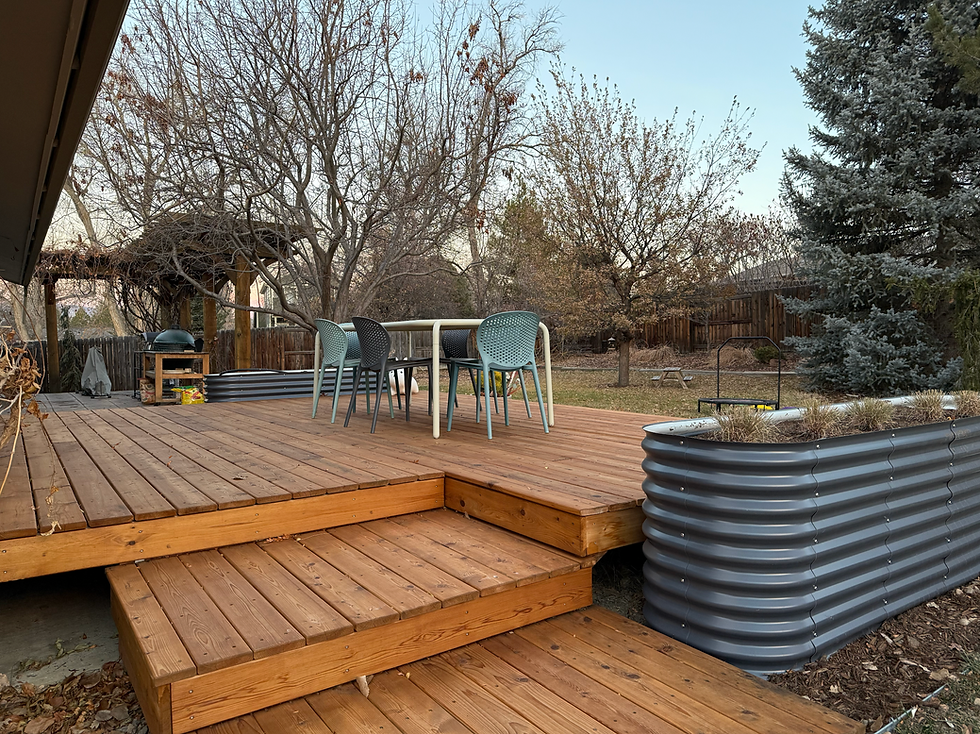
Which Option Handles Boulder's Clay Soil Better?
Decks generally handle Boulder's expansive clay soil more predictably because their footings are engineered below the frost line, isolating the structure from surface soil movement. Boulder County's clay-heavy soils expand when saturated and contract when dry, a cycle that can crack an improperly installed patio within two to three seasons. This is not a hypothetical risk; it's one of the most common callback issues we see in the region, particularly in neighborhoods like Gunbarrel and parts of North Boulder where clay content runs high.
That said, patios can perform just as well as decks when the substrate is engineered correctly. A properly built patio requires over-excavation below the finished grade, a compacted aggregate base of at least six to eight inches, and in some cases a geogrid layer to distribute load and resist soil heave. Skipping this step to save on upfront cost is the single most common reason patios fail prematurely in Boulder County.
If your site has known expansive clay or a history of foundation issues nearby, a deck with properly engineered footings removes much of that risk. If you go the patio route, budget for soil engineering as a non-negotiable line item, not an optional upgrade.
How Does Drainage Factor Into the Decision?
Drainage is often the deciding factor between a patio and a deck, since standing water is the fastest way to compromise either structure. Patios must be graded at a minimum slope of one to two percent away from the home's foundation, and in Boulder's downslope wind and sudden precipitation events, that grading needs to account for significant runoff volume, not just a light rain. Without this, water pools against foundations, undermines base material, and accelerates freeze-thaw cracking.
Decks solve surface drainage differently: water passes through the decking boards to the ground below rather than pooling on the surface, which can be an advantage on tricky sites. However, that water still has to go somewhere, and if the area beneath the deck isn't graded and drained properly, you end up with a soggy, erosion-prone zone that affects the footings over time. Integrating a French drain or engineered swale beneath a deck is a detail that's frequently overlooked in standard installations but matters enormously in the Front Range's runoff patterns.
Whichever structure you choose, the drainage plan should be designed before the surface, not adjusted afterward. Retrofitting drainage under an existing patio or deck is far more expensive than building it in from the start.
What Materials Hold Up Best to Boulder's Climate?
For patios, dense natural stone, thick-cut flagstone, and porcelain pavers consistently outperform poured concrete and porous materials in Boulder's freeze-thaw cycles. Concrete is prone to surface spalling as water infiltrates small cracks, freezes, and expands, a problem that compounds year over year at altitude where temperature swings are more extreme. Porcelain pavers, by contrast, have near-zero water absorption, which makes them highly resistant to freeze damage and UV fading from Boulder's intense high-altitude sun exposure.
For decks, composite decking generally outperforms untreated wood in this climate because it resists the drying, cracking, and splintering caused by low humidity and strong UV exposure. Wood decks aren't off the table, but they require more diligent sealing and maintenance to avoid premature graying and checking. Whatever material you choose, fasteners and structural hardware should be rated for the freeze-thaw and moisture cycling common to the region, since standard hardware can corrode or loosen faster than expected.
Which Choice Adds More Long-Term Value?
Both patios and decks can add meaningful resale value in Boulder County, but the higher-performing option is the one engineered specifically for your site's soil, slope, and drainage conditions. A beautifully designed patio that heaves within three years is a liability, not an asset, regardless of the materials used. Buyers and appraisers increasingly view outdoor living spaces as an extension of livable square footage, but only when that space reads as permanent and well-built.
Design continuity also plays a role in perceived value. Matching a patio's stone or a deck's railing details to the home's existing architecture creates a sense that the outdoor space was planned as part of the property, not added as an afterthought. This kind of intentional design, paired with sound engineering underneath, is what separates a short-term landscaping project from a long-term investment.
Building an Outdoor Space That Outlasts the Trend
Choosing between a patio and a deck isn't just a style decision, it's a site-specific engineering question. The best outdoor living spaces in Boulder County are the ones where design intent and structural planning happen together from day one, accounting for soil behavior, drainage, and material performance rather than treating them as afterthoughts. At GROW Boulder, we approach every patio and deck project with both perspectives in mind, so the space you fall in love with today is still performing exactly as it should years down the road.
Key Takeaways
Patios sit at grade and interact directly with soil movement, while decks are elevated on engineered footings that isolate the structure from surface soil behavior.
Boulder County's expansive clay soil is the leading cause of premature patio failure when proper over-excavation and base preparation are skipped.
Grading a patio at a one to two percent slope away from the foundation is essential to prevent water pooling and freeze-thaw cracking.
Decks require drainage planning beneath the structure, not just on the surface, to avoid erosion and footing damage over time.
Dense natural stone and porcelain pavers outperform standard concrete in Boulder's freeze-thaw and high-UV conditions.
Composite decking generally holds up better than untreated wood against Boulder's low humidity and intense sun exposure.
Long-term value depends on site-specific engineering, not just material choice or design style.
Drainage and soil engineering should be planned before construction begins, since retrofitting these systems later is significantly more costly.
Frequently Asked Questions
Is a patio cheaper than a deck in Boulder?
Often yes for level, accessible sites, but costs rise quickly if soil engineering, over-excavation, or drainage work is required, which is common in clay-heavy areas.
Do decks need a permit in Boulder County?
Most elevated decks require a building permit due to structural footing and load requirements; check with your local jurisdiction before starting construction.
How long does a well-built patio last in Colorado?
A properly engineered patio with adequate base preparation and freeze-resistant materials can last 20 to 30 years or more with routine maintenance.
Can I build a patio on a sloped backyard?
Yes, but sloped sites typically require retaining elements, terracing, or additional grading work to manage runoff and prevent erosion.
Which is better for entertaining, a patio or a deck?
Patios generally suit larger, ground-level gatherings and easier furniture flow, while decks work well for properties needing elevation change or separation from the yard.
Do composite decks fade in Boulder's sun?
High-quality composite decking is UV-stabilized and resists fading far better than standard wood, though color selection can still affect heat absorption and visible wear over time.
Does soil type affect deck footings?
Yes, expansive clay soils require footings poured below the frost line and sometimes additional engineering to prevent shifting over time.