
Smart Irrigation & Precision Drainage
Precision Water Management
In the semi-arid climate of the Colorado Front Range, water is the lifeblood of your botanical investment. At GROW Boulder, we implement Precision Water Management through 'High-IQ' smart controllers. These systems move beyond traditional timers by reacting in real-time to local weather data—adjusting flow based on wind speed, humidity, and actual soil moisture levels to treat every plant zone as a unique micro-climate.
This tech-forward approach ensures that your estate remains vibrant without the waste associated with legacy systems. We prioritize Cycle-and-Soak technology, a method specifically designed for the heavy clay soils found in Erie, Frederick, and Longmont. By applying water in short, calculated bursts, we allow the soil to actually absorb the moisture rather than letting it run off into the street. This deep-root watering promotes a more resilient garden that can withstand the intense heat of a Colorado summer.

Invisible Engineering:
Structural Drainage Solutions
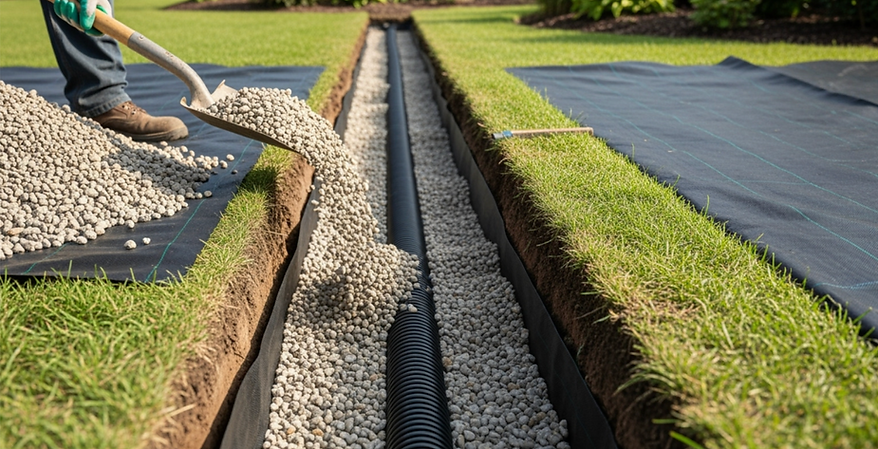
While irrigation sustains growth, professional drainage engineering protects your property’s structural integrity. We design Invisible Drainage Systems specifically to manage high-volume snowmelt and sudden foothills downpours. By integrating French drains and strategic site grading, we guide water away from foundations without disrupting your garden’s aesthetic.
We believe that functional engineering should never sacrifice beauty. In many of our designs, we transform drainage requirements into Dry Creek Beds or Rain Gardens. These features use river rock and moisture-loving native plants to filter runoff and return it to the local water table. By treating drainage as a design asset, we protect your masonry from hydrostatic pressure—the invisible force that causes retaining walls to lean and patios to crack—while adding a natural, riparian element to your botanical narrative. We often transform drainage needs into Rain Gardens or Dry Creek Beds using native stone. This approach mitigates hydrostatic pressure—the invisible force of trapped water that causes retaining walls to lean and masonry to crack—while returning filtered runoff to the local water table.