
The Engineering of Elegance: Designing an Outdoor Bar for All-Season Performance

In the high-altitude environment of Colorado’s Front Range, an outdoor bar is more than a place to set a drink—it functions as a year-round social anchor that must perform under highly variable weather conditions.
Homeowners in Boulder often encounter a familiar pattern: outdoor spaces that work well for a few summer weeks, then become too hot, too cold, or too exposed to use comfortably. Designing a bar that performs across all four seasons requires a careful balance of spatial design, material science, and environmental engineering.
At GROW Boulder, we approach the outdoor bar as a system rather than an object—one that must account for thermal movement, drainage behavior, soil conditions, and long-term durability while still feeling intuitive and inviting to use.
Why Is Material Selection Critical for Colorado Bar Tops?
Material selection in Colorado is less about appearance and more about performance under intense UV exposure, freeze-thaw cycles, and thermal loading.
At higher elevations, solar radiation is significantly stronger than at sea level. This can cause darker materials to become uncomfortably hot and can degrade low-quality resins or sealers over time. At the same time, winter freeze-thaw cycles place repeated stress on porous materials, which can lead to microcracking if not properly selected.
For this reason, we typically prioritize high-density natural stone or engineered sintered stone surfaces. These materials offer strong resistance to thermal expansion, UV degradation, and surface staining while maintaining a stable, usable temperature range in direct sun.
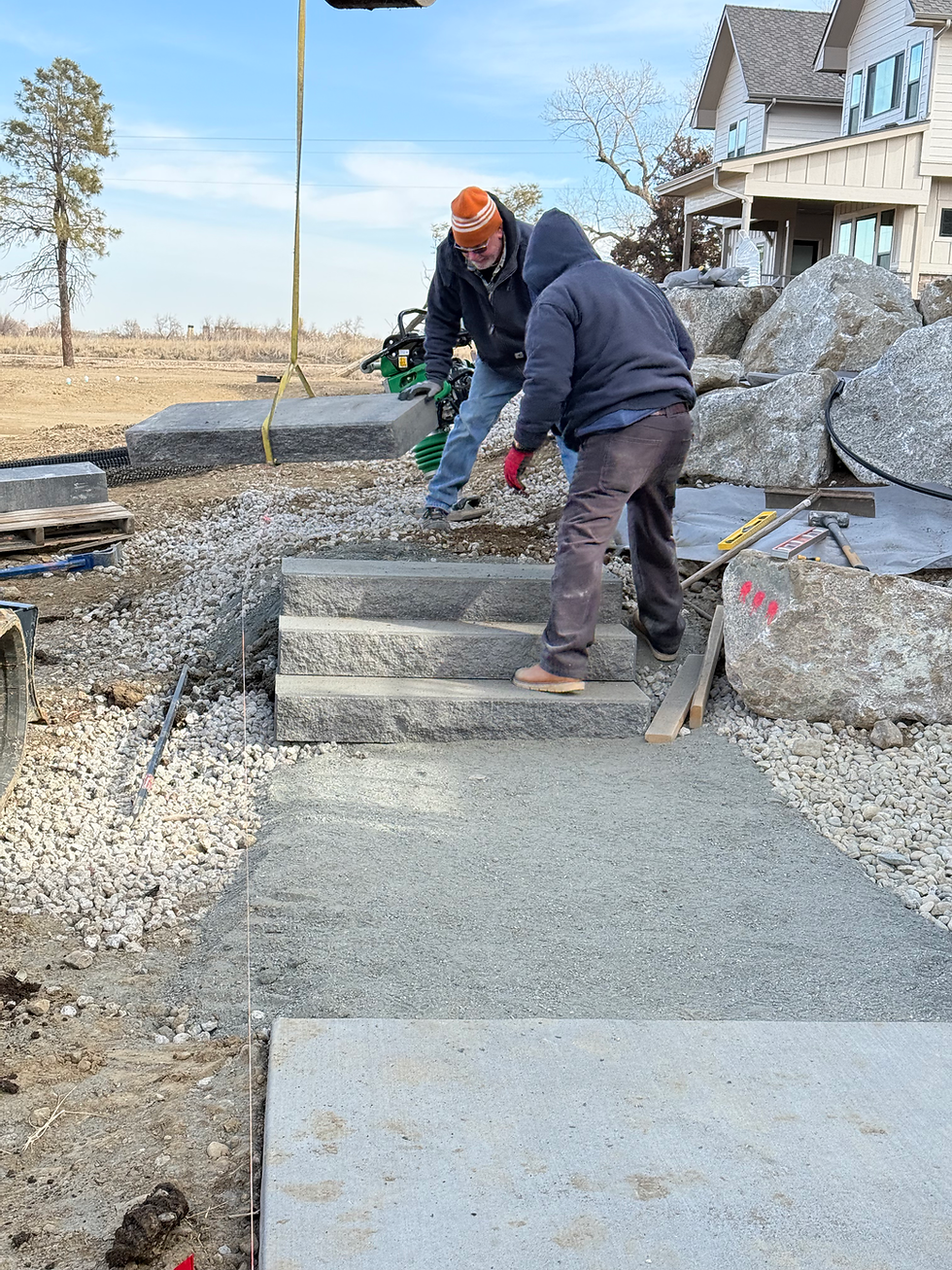
Equally important is the structural system beneath the surface. In Boulder’s expansive clay soils, outdoor bar structures must be supported by reinforced concrete foundations or pier systems that extend below the frost line. Without this, seasonal ground movement can cause gradual shifting that eventually stresses even the most durable countertop materials.
A properly designed bar top also functions as a water management surface. A slight overhang combined with an underside drip edge helps direct water away from cabinetry and structural joints. This prevents moisture intrusion during snowmelt and heavy summer storms, both of which are common along the Front Range.
How Do Integrated Heating and Cooling Systems Extend Outdoor Use?
Extending outdoor comfort across seasons depends on managing microclimates rather than trying to control open air.
For colder months, we often integrate infrared heating systems into overhead structures such as pergolas or covered bar frames. Unlike traditional gas heaters that warm surrounding air, infrared systems heat people and surfaces directly, making them more effective in windy conditions common to the foothills.
During warmer months, the design focus shifts to airflow and evaporative cooling. High-velocity outdoor fans and, in some cases, misting systems can significantly reduce perceived temperature when properly positioned. These systems must be engineered with freeze protection, including drain-down or blow-out functionality to prevent pipe damage during early cold snaps.
Energy efficiency is improved by zoning these systems so that heat or cooling is directed only where people are actively gathering, rather than conditioning the entire outdoor area. When paired with efficient electrical systems, these components can often be integrated into homes with existing solar capacity.
The goal is not to fully “control” the outdoors, but to smooth the extremes enough that the space remains usable through more of the year.
What Defines a Social Layout Optimized for Views and Flow?
A well-designed outdoor bar layout balances three elements: view orientation, circulation, and working efficiency. The most successful layouts orient seating toward a primary visual anchor—such as mountain views, a garden feature, or a water element—rather than toward the home’s exterior walls. This outward-facing arrangement strengthens the connection between the built environment and the surrounding landscape.
From a functional standpoint, the bar itself should support a clear working zone for preparation and service. This often includes maintaining adequate clearance behind seated guests to allow uninterrupted movement for the host. Standard spacing of approximately 30 inches per person helps prevent crowding while maintaining comfortable social proximity.
Drainage and grading are also integral to layout decisions. A subtle slope—typically around 2%—ensures that water from spills or storms moves away from seating areas toward designated drainage zones. In many Boulder installations, this is combined with permeable paving or discreet trench drains to manage runoff without disrupting the visual design.
How Do You Protect Outdoor Appliances from Weather and Seasonal Damage?
Outdoor appliances must be treated as engineered systems rather than indoor appliances placed outside. Refrigeration units, ice makers, and beverage systems should always be outdoor-rated, with corrosion-resistant stainless steel housings and sealed electrical components designed for temperature fluctuations. Proper ventilation is critical, as compressors generate heat that must be dissipated even in enclosed cabinetry.
Electrical systems should be installed with dedicated circuits and protected by ground fault interrupters to meet safety standards and ensure reliability during heavy use. Weatherproof conduits and sealed junctions further reduce risk in wet or freezing conditions.
Water supply lines require special attention in colder climates. Shut-off valves and drain points should be located within the home’s thermal envelope so that systems can be fully winterized before freezing temperatures arrive.
Ventilation within bar cabinetry also plays an important safety role. High and low vent placements allow heat and any potential gas leaks to dissipate, reducing the risk of dangerous buildup in enclosed spaces, particularly when propane appliances are used.
The objective is long-term reliability under repeated seasonal cycling, not just peak summer performance.
Designing Outdoor Bars That Perform Beyond Day One
A well-designed outdoor bar is ultimately defined by what you don’t notice: stable surfaces, comfortable temperatures, dry walkways, and equipment that simply works year after year.
At GROW Boulder, the goal is to design outdoor environments that remain usable through Colorado’s extremes—not by resisting nature, but by engineering around it.
Key Takeaways
Foundation Stability: Outdoor bars in Colorado require frost-depth foundations and soil-aware structural systems to prevent seasonal movement.
Thermal Comfort: Material selection and infrared heating help moderate temperature extremes and extend usability into shoulder seasons.
Water Management: Proper grading, drainage, and drip-edge detailing protect structural components from long-term moisture damage.
System Durability: Outdoor-rated appliances, electrical protection, and winterization planning are essential for long-term reliability.
Spatial Design: View orientation, circulation spacing, and working zones must be carefully balanced for both comfort and functionality.
Material Performance: Non-porous stone or engineered surfaces significantly improve resistance to UV exposure, staining, and freeze-thaw stress.
Frequently Asked Questions
What is the best height for an outdoor bar counter?
A standard bar height of 42 inches works well for social seating, while a secondary prep surface at 36 inches improves ergonomics for food and drink preparation.
Does an outdoor bar need a dedicated drainage system?
If the bar includes a sink or frequent wash-down use, a drainage strategy is essential. Depending on local code, runoff may be directed to approved landscape drainage systems or dry wells, provided it does not affect foundations or neighboring properties.
How do I prevent stone surfaces from staining outdoors?
Sealing natural stone annually helps reduce staining from oils, organic material, and mineral deposits. For lower maintenance, non-porous engineered stone alternatives offer higher resistance to staining and weather exposure.
Can wood be used in outdoor bar construction?
Yes, but it requires careful material selection and detailing. Dense, rot-resistant species such as ipe or cedar perform best, and all wood elements should be isolated from concrete surfaces to reduce moisture transfer and decay.
What lighting works best for outdoor bars at night?
A layered approach works best: task lighting for prep areas, ambient lighting for social spaces, and low-level path or toe-kick lighting for safety and spatial definition. All fixtures should be rated for full outdoor exposure.

