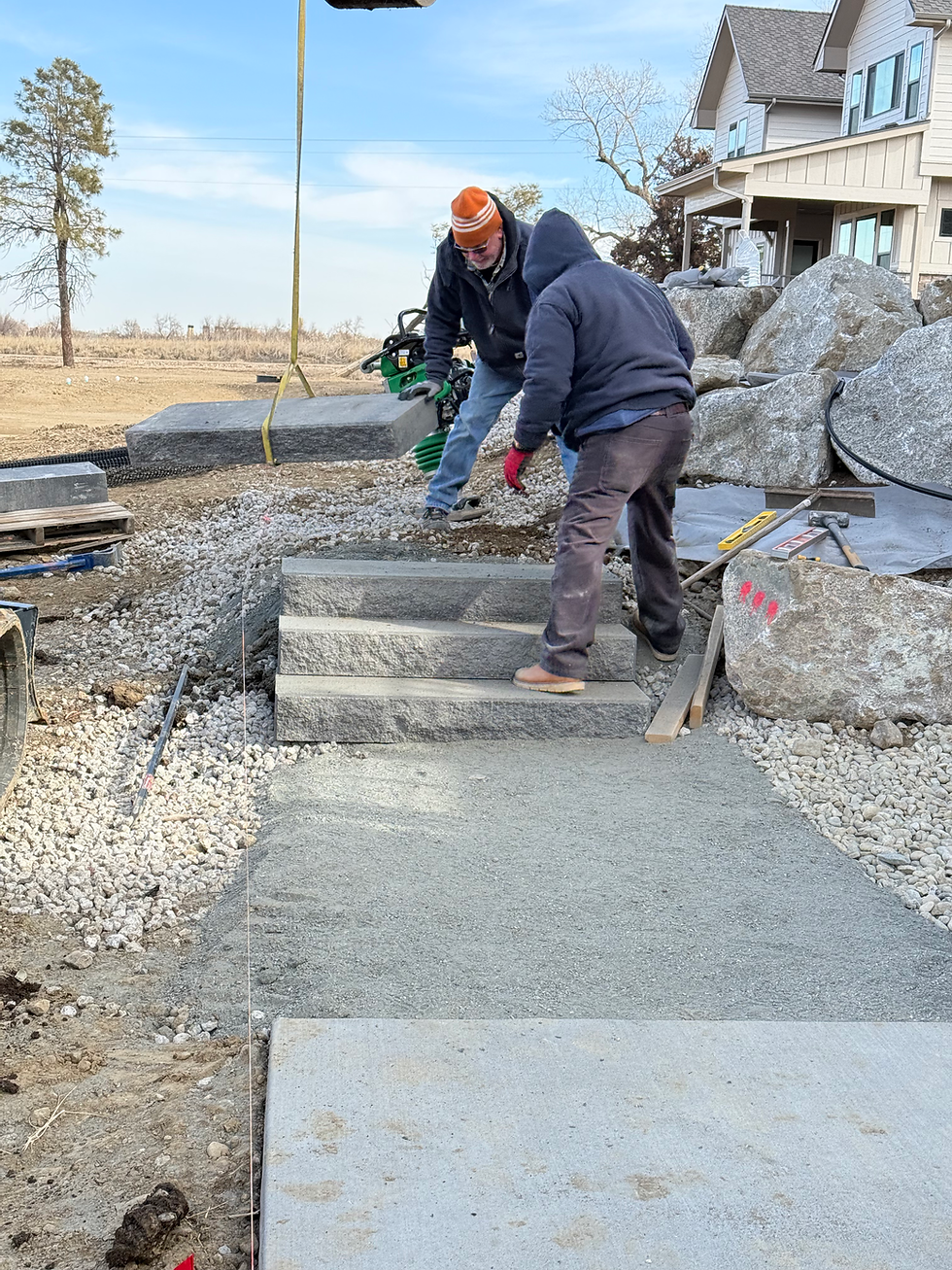
How Freeze-Thaw Cycles Damage Patios, Walkways, and Retaining Walls in Boulder

A hairline crack in a patio, a paver that has lifted overnight, a retaining wall that leans a little more each spring. These are rarely sudden failures. They are the cumulative result of Boulder's winters, when sunny afternoons melt snow and clear nights freeze it again, sometimes dozens of times in a season. Understanding how freeze-thaw cycling works makes it easier to see why some hardscape lasts decades and some starts failing within a few winters.

What Is a Freeze-Thaw Cycle, and Why Is Boulder So Hard on Hardscape?
A freeze-thaw cycle is the repeated freezing and thawing of water in and beneath a surface, and Boulder experiences many of them because strong winter sun warms surfaces by day while clear, cold nights refreeze the moisture. Water expands by roughly nine percent when it freezes. If that water is trapped in a pore, a joint, or the soil beneath a slab, the expansion creates pressure that materials and bases were not designed to absorb.
Each cycle is small, but the effect compounds. Cracks widen, joints open, and the base loses its original compaction. A surface that handled the first winter without trouble may show damage by the fifth.
Altitude plays a role as well. Intense sun on south-facing walls and paving accelerates daytime melting, which feeds the next night's freeze, so the sunniest hardscape on a property often cycles the most.
How Does Frost Heave Move Patios and Walkways?
Frost heave lifts patios and walkways when moisture in the soil freezes into ice lenses that push upward on whatever sits above them. Soils with a high proportion of fine particles, such as the clay and silt common across Boulder County, hold more water and are more prone to this effect. As ice lenses grow, they can raise a slab or paver surface unevenly, and the surface does not always settle back to its original position when the ground thaws.
An engineered base is the primary defense. Excavating below the finished grade and installing a compacted layer of free-draining aggregate, commonly six to eight inches or more depending on conditions, gives water a place to drain instead of freezing directly under the surface. Geogrid can add stability on weaker soils.
Grading matters as much as the base. A surface graded to shed water away from the structure, with drainage that carries it somewhere safe, removes much of the moisture that freeze-thaw cycling depends on.
Why Do Concrete and Pavers Crack or Scale?
Concrete cracks and scales when water absorbed into the surface freezes and expands, breaking off thin layers in a process called spalling. Poorly finished or non-air-entrained concrete is especially vulnerable, and de-icing salts can speed the damage. Control joints, proper curing, and good drainage help concrete handle repeated cycling.
Pavers fail differently. Individual units can handle freezing well when they are dense and low in water absorption, but they rely on the base and joint sand to stay locked in place. If water collects in an inadequate base, freezing can shift the pavers and open the joints. Porcelain and dense natural stone absorb little water, which helps them resist cracking.
Edge restraints and joint stabilization also play a role. Pavers held firmly at the perimeter and filled with a suitable jointing material resist the lateral movement that freeze-thaw cycling encourages.
How Do Freeze-Thaw Cycles Affect Retaining Walls?
Freeze-thaw cycles stress retaining walls by freezing water trapped in the soil behind the wall, which increases pressure and can push the wall outward over time. Water that cannot escape is the central problem. Frozen drainage lines or clogged gravel can leave moisture in place, so the wall carries loads it was never designed for.
Prevention is built into the construction. Free-draining gravel backfill, a perforated drain pipe at the base leading to a daylight outlet, and filter fabric to keep soil from clogging the gravel all keep water moving. Taller walls and those supporting driveways or structures generally need engineered reinforcement such as geogrid and a documented design.
Maintenance extends the life of the system. Keeping drain outlets clear and watching for new cracks, leaning, or bulging allows small issues to be corrected before they become structural problems.
Building So Winter Has Less to Work With
Freeze-thaw damage is a predictable response to water, soil, and temperature, which means it can be designed around. Strong bases, careful grading, and drainage that works in January as well as July keep hardscape performing through Boulder's winters. GROW Boulder builds patios, walkways, and walls with those details in mind, so the structure holds up long after the first few seasons.
Key Takeaways
Boulder's sunny days and cold nights create many freeze-thaw cycles each winter.
Water expands roughly nine percent as it freezes, and trapped water creates pressure that hardscape was not built to absorb.
Frost heave occurs when ice lenses form in moisture-holding soil, which is common in clay and silt.
A compacted, free-draining aggregate base is the primary defense for patios and walkways.
Concrete scales when absorbed water freezes, and proper finishing, curing, and drainage reduce the risk.
Pavers depend on their base, edge restraints, and joints to stay locked in place.
Retaining walls need free-draining backfill and a drain pipe to relieve pressure from frozen water.
Grading that sheds water away from hardscape removes much of the moisture that freeze-thaw cycling needs.
Frequently Asked Questions
Why does my patio crack every winter?
Moisture trapped in the surface or soil freezes and expands, and repeated cycles widen small cracks over time.
What is frost heave?
It is upward movement of the ground caused by ice lenses growing in moisture-holding soil.
Can sealing a patio prevent freeze-thaw damage?
A breathable sealer can reduce water absorption, but it works best alongside a sound base and good drainage.
Why are pavers lifting after winter?
An inadequate base, poor drainage, or loose edge restraints often allow freezing water to shift them.
Do retaining walls need drainage?
Yes, drainage behind the wall relieves pressure from water that would otherwise freeze and push against it.
Is there a way to avoid freeze-thaw damage entirely?
Not entirely, but proper base preparation, drainage, and material selection greatly reduce it.